
Training
House-training
The most important thing about house-training is to familiarize yourself as early as possible with your puppy’s behaviour so you can prevent “little accidents” and make “doing its business” something positive that can be encouraged and rewarded. At first, you can even keep a kind of logbook and note the times of meals and of pees and poops. This quickly reveals your dog’s habits and shows you when to take it out so it can relieve itself in the appropriate place.
There are unavoidable moments: after eating, after a play session or an episode where the puppy gets excited, before and after a nap, you take it out so it can pee or poop. You encourage and praise it as soon as it does. You can give it a small treat or a pat.
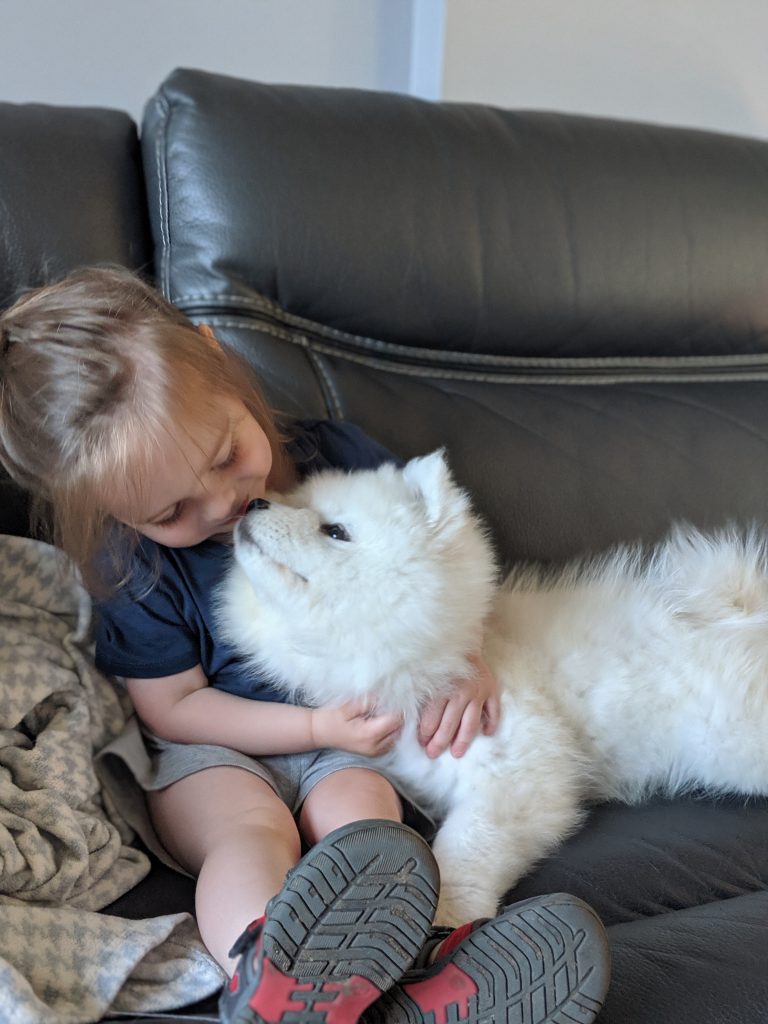
Since the puppy learns by association, it is up to the owner to establish a routine and link relieving itself outdoors to something pleasant and rewarding. Note that the more rewarding the reward, the faster the association will form. Some owners choose a special treat that the puppy particularly enjoys and only gets at the moment of doing its business.
This way, the puppy will try to repeat the behaviour and will come to ask to go out on its own to do its business. Since a puppy tends to go back to the same spot to relieve itself, where it finds its own scent, if it has an accident in the house you need to clean thoroughly to remove all traces of urine or feces odour. We suggest a mixture of water and vinegar for this (no products containing ammonia).
In the puppy, the bladder and pelvic muscles are still developing. It therefore cannot hold on for long hours. It is said that it can hold on for roughly the same number of hours as its age in months: at 3 months, 3 hours, and so on. This means getting up at night in the first weeks. Waking the puppy and taking it out before it can no longer hold on makes house-training much easier, because you set the puppy up for success rather than failure. You let it develop the right behaviour, which you can then encourage and reward. While it sleeps, the puppy can hold on a little longer than during the day when it is fully active. So you can gradually increase the number of hours before waking it, and soon it will sleep through the night.
Remember that breeders remain an excellent resource and can support you throughout your Samoyeds’ lives. Don’t hesitate to contact them with any question or concern, and also to share good news.
Socialization
The puppy is especially receptive to learning in the first weeks of its life. Breeders, trainers and behaviourists agree that the period before 12 to 16 weeks is when the puppy most quickly takes on the habits and behaviours we want it to develop. It is the ideal time to socialize it, that is, to put it in all sorts of situations and environments it should get used to.
Briefly introducing it to pet-sitters or a boarding kennel you might need, getting it used to certain noises like the vacuum or the dryer, familiarizing it with car travel and, of course, introducing it to your circle and to other animals: all of this is part of the puppy’s socialization. It is also important to introduce it early to care routines such as handling the paws in preparation for nail trimming, brushing the teeth, bathing and thorough drying. In short, the idea is to get it used to its dog’s life as quickly as possible!
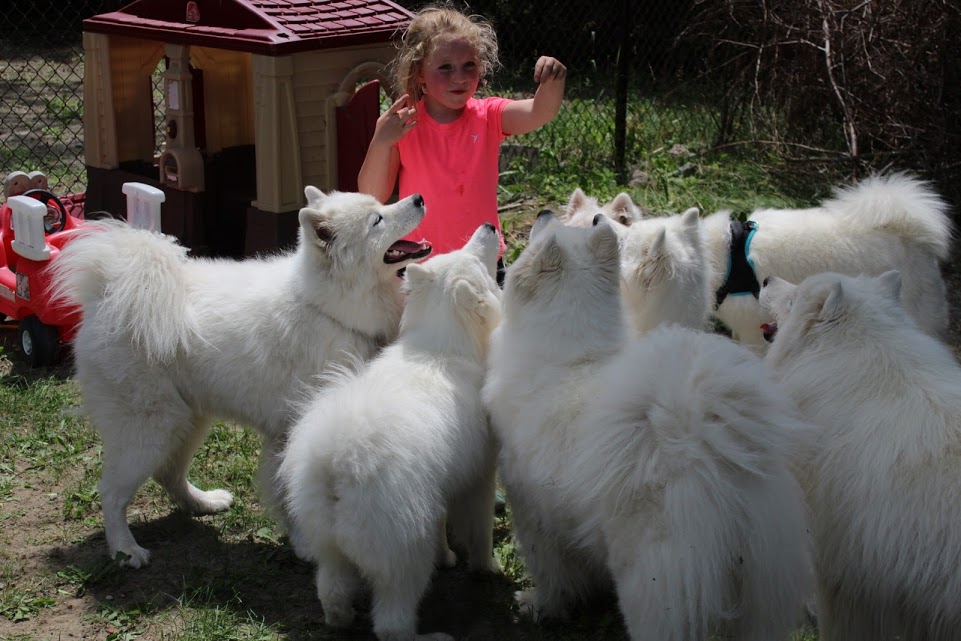
As for obedience training, to make the most of this period when the puppy “soaks up everything,” puppy kindergarten or socialization classes are becoming more and more popular.
Beyond teaching the basic commands like sit, down, come and stay, kindergarten classes are mainly there to train your dog to concentrate, to focus on you when you ask for its attention, to respond instantly to its name and to manage its high level of excitement around other people and other dogs in group classes.
Whether in a kindergarten class, usually open to puppies from 3 months, in a basic obedience class or in a private class if that suits you better, you will mainly learn to rely on positive reinforcement to link desired behaviours to a form of encouragement or a reward your dog enjoys. It may seem surprising, but the puppy is capable of thinking things through; you must therefore let it decide for itself which behaviour to adopt.
With positive reinforcement, rather than forbidding or punishing a bad behaviour, you work to replace it with a desired behaviour and reward the dog as soon as it complies. For example, if the puppy jumps on you, you ask it to “sit” instead and reward it as soon as it does. The puppy will naturally try to repeat the behaviours that “pay off.” You try to set the puppy up for success by gradually asking for the expected behaviours and, VERY IMPORTANT, you show your satisfaction as soon as it meets your expectations. This is called “marking” the positive behaviour with a word, an expression, a particular tone or a gesture BEFORE giving a treat. Later, this lets you space out the treats and rely more on expressing your satisfaction. This way, you teach the puppy to work to please its owner and not only to get the treat. Otherwise, you risk falling into the trap where the dog refuses to work or obey without getting a treat.
In short, the socialization stage is very important for laying the foundations of a good relationship with your animal and developing its ability to concentrate and obey. At the same time, you should not ask too much of your puppy. It is better to keep socialization or training sessions short and to leave it time to play and relax. That is how it can grow into a healthy, well-balanced adult dog.
There are many online resources about socialization, so look into them!
Mouthing
For the puppy, mouthing is not only normal but a need. It is a way of exploring its environment, learning to control the force of its bite and reacting to the effect it produces. It is also a way of relieving the discomfort it may feel during the transition to its adult teeth.
Mouthing should never leave marks on the skin and, in principle, it should pass with age. The puppy needs to be guided in this direction. So if it wants to mouth your fingers or feet, offer it safe toys instead that will interest it and that it can chew, gnaw or bite. There are many: a Kong ring dipped in broth and frozen is a very popular example with puppies, as are braided ropes. Do not let the puppy chew socks, shoes or fabric toys, as it could swallow pieces of them!
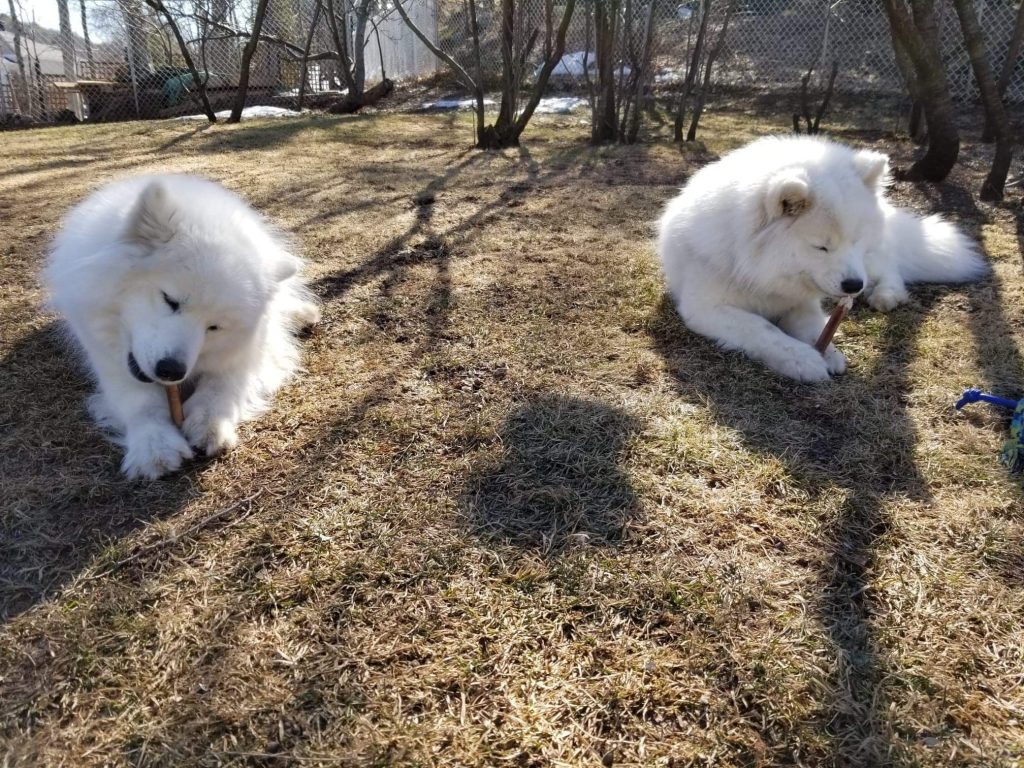
Mouthing, chewing and gnawing work your dog’s brain. Encourage it to work to get its chew object or toy. Offer its meals or treats in items that make it think to get them, such as snuffle mats, classic Kongs or the Wobbler, or the Orbee-Tuff Snoop. You will maximize the mental work while curbing the urge to gulp its food down too fast.
Note that the adult dog will keep the need to gnaw, whether to fight boredom, to spend excess energy, to relieve frustration or anxiety, or simply to keep its jaw active. You will need to gradually offer it items that meet this need. We recommend favouring so-called “natural” bones (beef tendons, or bully sticks, being the most popular) and avoiding rawhide bones. It is good to know that when a dog gnaws, its brain releases endorphins. Chewing or gnawing is therefore a good way to help it calm down.