Origin
The Samoyed is a breed of dog originating from European Russia and western Siberia. It is a Nordic Spitz-type dog characterized by its tail carried over the back. The Samoyed is known for its famous “smile” and its thick white coat, sometimes tinged with biscuit (pale beige) and cream.
The Samoyed is one of the oldest primitive breeds in the world, meaning it has undergone no genetic modification by humans except, over time, to favour the whitest possible coat, since originally the Samoyed could display several colours including black, brown and tan.
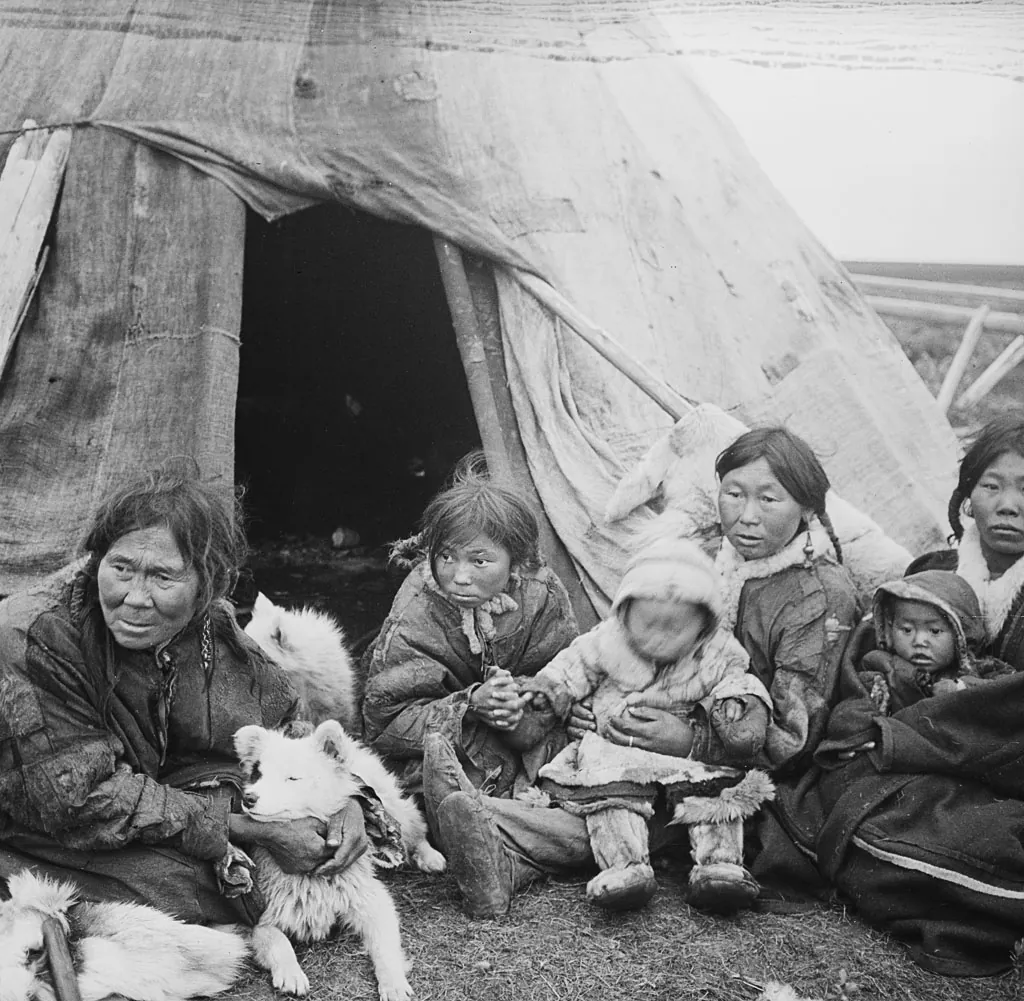
The Samoyed takes its name from a nomadic tribe that lived by herding reindeer and hunting. The tribe, once called the Samoyede, is known today as the Nenets.
The Samoyed was considered a member of the family. It slept in the camps, providing a source of warmth for the family and serving as a true “nanny” for the children. The women collected its woolly undercoat to knit warm garments.
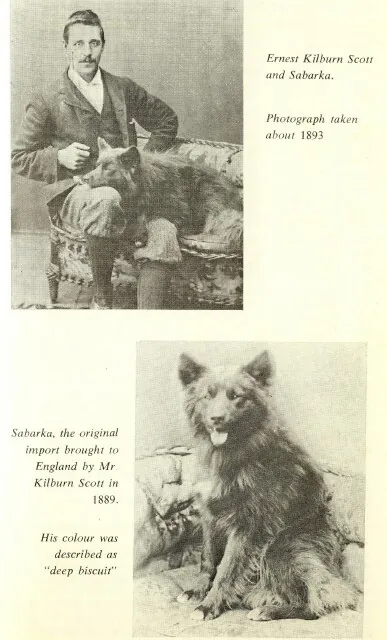
It was the British zoologist Ernest Kilburn Scott who discovered the breed and who, after spending three months with members of the tribe, convinced them to let him bring one back to England in 1889. He brought home a brown male puppy named Sabaka (“dog” in Russian). Later he imported a cream-coloured female named Withey Petchora and a snow-white male named Musti.
These three dogs, together with those brought back by the other English explorers who followed, formed the foundation of Western Samoyed breeding, which spread around the world from England. The first standard was written in England in 1909. White dogs were, at the time, a minority.
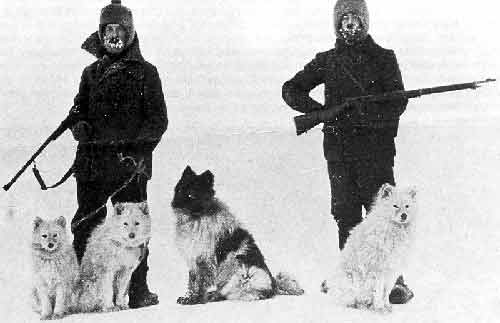
Used on the early polar expeditions, the breed can withstand extreme temperatures down to −40 °C. In fact, it was a Samoyed that became the first dog to set its paw on the South Pole during the 1911 expedition of the Norwegian explorer Roald Amundsen.
Today the appearance of Samoyeds has become more uniform, and the breed standard is similar throughout the world. Different characteristics can be observed between the various lines depending on each breeder’s priorities. With globalization, breeders have access to lines from all over the world to improve their dogs and bring them as close as possible to the standard.